Tour of Britain 2026: The Route
 fotobureau Cor VosThe Tour of Britain is a race for puncheurs and sprinters who don’t shy away from a bit of climbing. Across five days, the riders face 8,822 metres of elevation gain. Who will succeed Romain Grégoire as overall winner?
(Slideshow route/profile)
fotobureau Cor VosThe Tour of Britain is a race for puncheurs and sprinters who don’t shy away from a bit of climbing. Across five days, the riders face 8,822 metres of elevation gain. Who will succeed Romain Grégoire as overall winner?
(Slideshow route/profile)
Published on 1 September 2026
Race dates: Wednesday 2 September – Sunday 6 September
Race type: multi-day race for sprinters and puncheurs
Favourites: Benoît Cosnefroy, Florian Vermeersch, Jasper Stuyven, Tim Wellens
Key stage: 4
Title holder: Romain Grégoire
Record holders: Edvald Boasson Hagen, Lars Boom, Wout van Aert (2 overall wins)
Stage-by-stage breakdown: 2026 Tour of Britain
Stage 1 – 182.5 kilometres, 1,393 metres of elevation gain
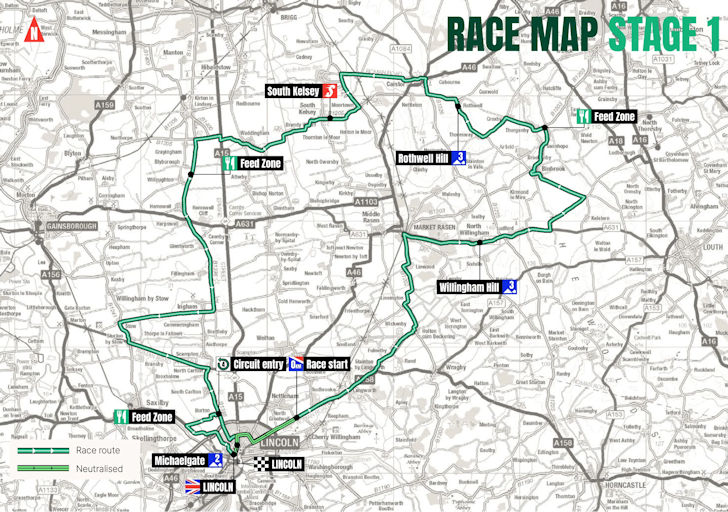
The Tour of Britain opens with a big loop north of start and finish town Lincoln, followed by four smaller loops. The finishing circuit is 12.3 kilometres long and features the Michaelgate on each lap. The 400-metre climb averaging 10.5% also serves as the finish. In 2015, Peter Kennaugh won the British Road Race Championships on Michaelgate.
Stage 2 – 180.2 kilometres, 873 metres of elevation gain
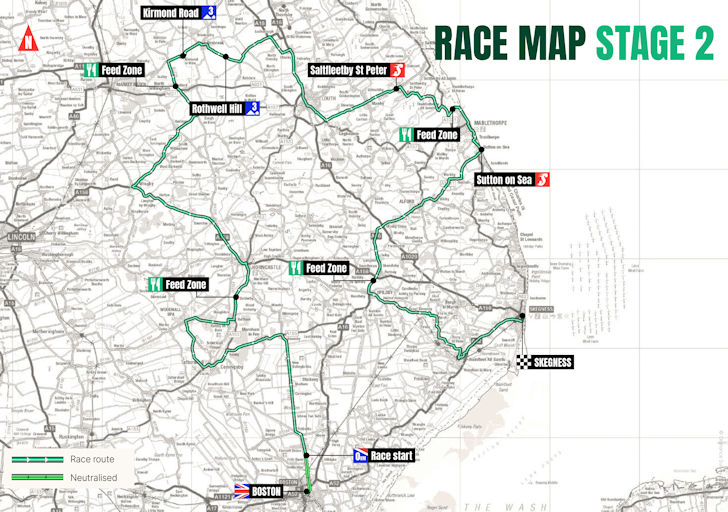
Stage 2 takes the riders from Boston to the coastal town of Skegness. It can be done in 35 kilometres, but the riders take more than five times as long. Along the way, they tackle two climbs, the last coming just before the halfway point. In short, this is one for the pure sprinters.
Stage 3 – 194.1 kilometres, 1,621 metres of elevation gain
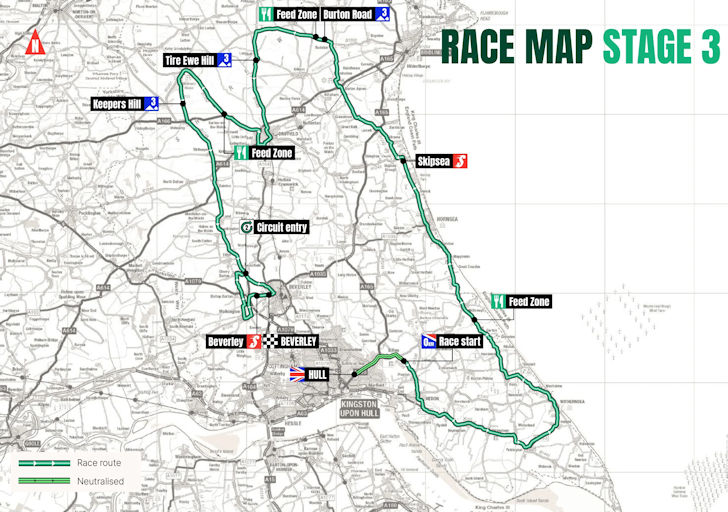
Hull and Beverley are also two towns that lie close together. After the start in Hull, the first half of the stage heads north, parallel to the coast, before the riders tackle three climbs – the last 61.3 kilometres from the finish – on their way to the finishing circuit in Beverley. They will complete it three times, with the stage likely to end in a sprint. Just like in 2023, when Olav Kooij outgunned Danny van Poppel and Ethan Vernon. The finishing straight rises slightly.
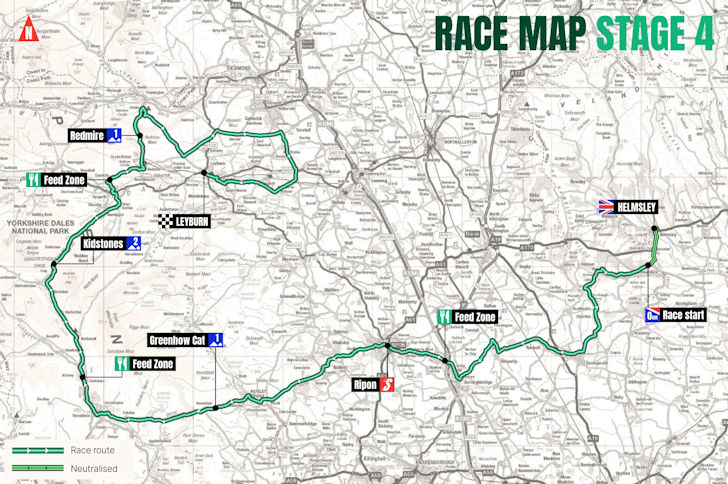
Stage 4 – 165.8 kilometres, 2,699 metres of elevation gain
The toughest stage of the Tour of Britain runs from Helmsley to Leyburn. After a flat-to-undulating opening, the riders tackle Greenhow Bank (3.3 kilometres at 7.9%) before entering terrain familiar from the opening stage of the 2014 Tour de France: Kidstones, a 2.4-kilometre climb averaging 6.3%. The road then climbs for another 3.5 kilometres at 8.2% to Redmire, and immediately after the descent comes Grinton Moor, also known from the 2014 Tour: 4.4 kilometres at 5.3%. The route then heads gently downhill for just under 20 kilometres before the closing phase rolls gently uphill again. Eventually, a 400-metre section at 7% leads onto a 1.5-kilometre uphill-sloping finale.
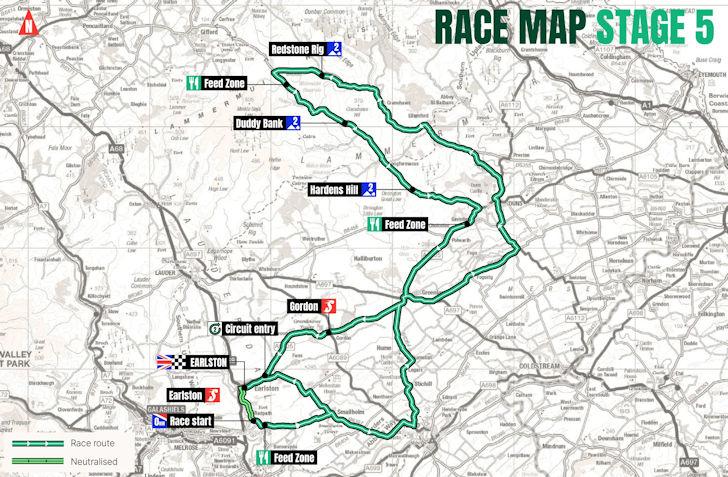
Stage 5 – 156.1 kilometres, 2,236 metres of elevation gain
There is plenty of climbing on the stage from Earlston to Earlston, but interestingly, the biggest obstacles come a long way from the finish. The riders cross the line for the first time with 38.9 kilometres to go, followed by two finishing laps. These are gently rolling, making a sprint finish a likely outcome on the final day of the Tour of Britain.
Tour of Britain 2026: routes
Click the images to enlarge
Comment
No comments yet, please share your view!